
Winterizing an RV: 6 Easy Steps to Protect Your Camper for Winter
Camping season has come and gone, and now it is time to get campers ready for storage. In almost all of the U.S., and definitely in the Midwest, you have to winterize your RV or you will have problems later. Cracked lines, cracked fittings, and even a cracked water heater are possibilities.
Like many things, new RV owners dread; winterizing them isn’t that big a deal. All it takes is warm weather, a couple of hours, and some RV anti-freeze.
Why Do You Need to Winterize Your RV?
Winterizing your RV is essential to prevent frozen pipes, cracked tanks, and expensive repairs. If you plan to store your RV through the winter or won’t be using it in freezing temperatures, following a few key steps will keep it in great shape for spring. This guide covers when to winterize, how to do it yourself, and what happens if you skip it.
What Month Should I Winterize My RV?
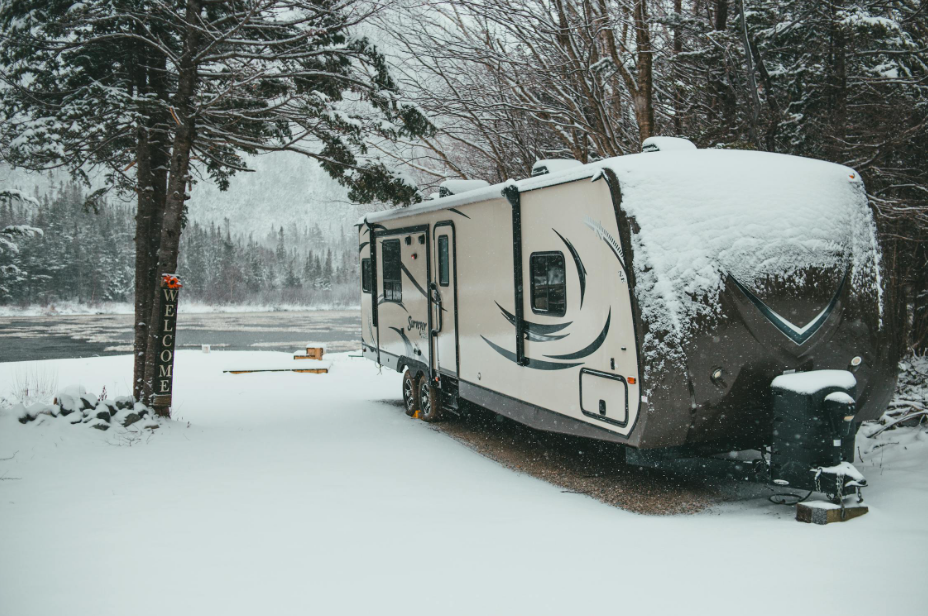
The right time depends on your climate. Most RV owners winterize between October and November, before temperatures dip below freezing. In northern states, it’s smart to winterize earlier. In milder southern climates, you can delay slightly while still protecting your RV if you expect occasional freezes.
How Do I Winterize My RV Myself?
Winterizing your RV yourself is a straightforward DIY task that usually takes one to two hours. All you need is RV antifreeze, basic tools, and possibly an air compressor. Follow the steps below to make sure your rig is protected all winter long.
I highly recommend checking out this video by Forest River, and you can also search YouTube for other videos on the process. There are LOTS of really good videos on how to winterize, and information is your friend, so watch a few to get a feel for the process.
Steps to Winterize an RV
1. Remove Hookups and Drain Your RV’s Water System
The first step is to drain everything in the RV, and I mean everything. Remove the city water hookup, and if your fresh water tank still contains water, turn on the water pump and run your faucets until nothing comes out.
Make sure to do this one faucet at a time, and one side of the faucet at a time, because the pump is not strong enough to push water through all the faucets at once. You can get stuck with water in the line when you think it’s empty.
Also, get down to the belly of your RV and identify the low-water points; open them to drain. These will be pieces of plumbing line pointing straight down, each with a valve. It is very important to open these because a surprising amount of water can get trapped in low points of the freshwater system, and it will cause you major headaches if it freezes.
Finally, make sure drain your hot water heater. This is fairly easy and involves removing the heating element at the low point of the heater tank. Once it is completely empty (or after you have blown out the lines with air if you choose that route), make SURE you close both inlet valves; you do not want any antifreeze getting into your water heater.
2. Blow Out Your Water Lines
This is a method I recently adopted for my own travel trailer, and so far it works great. It is a better way to ensure the lines are actually clear and empty without repeatedly rinsing them to confirm all anti-freeze traces are gone.
For this, you will need a simple adapter, which is readily available at camping stores, although I bought this one from Amazon, and it has worked great. The only thing with this method is that you will need access to a real air compressor with a tank. I used a small 6-gallon compressor, which had enough air for the job, although it is important to again state that you need to do this only one faucet at a time because the air compressor (unless you have a large industrial unit) does not have enough air to clear all of the lines at once.
All you have to do is attach an air compressor to the city water inlet with an appropriate adapter. Then, set the pressure to around 30–40 PSI to safely blow out the remaining water. Open each faucet until only air comes out. Also, you can leave the water heater heating element removed while you blow out the lines, since more water will drain from them, too.
Also, while the air is in the line, press your toilet valve and blow out all the water from the toilet system. You do not want to forget this step because if you crack the toilet, you’ll have to replace it.
3. Add Antifreeze to the Outside Intakes and to the Drains
Adding antifreeze to the lines is not strictly necessary if you choose to blow them out, and blowing them out will save you a lot of antifreeze. However, you MUST add antifreeze to all of the drains in your RV. If you skip this step, you can be in for a rude awakening.
This part of the process is important, and you should consult your owner’s manual for your specific make and model because it will detail exactly how that model should be done. For the most part, you want to avoid adding antifreeze to the water heater, so make sure to shut off the lines to it.
4. Disconnect the Batteries
Once the lines are purged and antifreeze is added, you can proceed with the battery. Make sure that everything is turned off and the slides are pulled in, and then unhook the battery. I take mine off the trailer and put it in my garage, connected to a trickle charger to keep it in optimal health over the long, cold Midwest winters (I live and camp in Northeast Kansas).
5. Seal Openings
This next step is quite important: sealing off openings. Rodents, bugs, and who knows what else will gladly make your camper their home for the winter, so make sure to cover up and seal off any easy access points from these unwelcome visitors. Rats will destroy everything in no time, and mice will leave disgusting messes everywhere. They also multiply at an alarming rate, so once they call your RV home, you could be hosting a rather large family very quickly.
6. Cover the RV
It is a good idea, especially in wet climates, to cover your RV. Do not use tarps, no matter how tempting it is. RV covers are designed to breathe, so when it rains or snows, they will dry out and your camper will, too.
It is also not a bad idea to get tire covers to keep your rubber in good shape during the off-season.
Should You Leave Faucets Open After Winterizing an RV?
Yes. Leave faucets slightly open to relieve pressure and allow any trapped air or antifreeze to expand safely. Keep them open until you de-winterize in spring. There is no risk or downside to this, but built-up pressure can cause you some problems.
Additional Ways to Winterize a Motorhome
There are a few extra steps for winterizing motorhomes if you go that route. Long winters without running is never a good thing for machinery, so you might want to keep the battery connected OR you can install a simple battery switch. These only cost a few bucks and simply clamp onto one of the battery terminals, giving you an inline switch. You can turn the battery off so no leeches sap its power and destroy it, and switch it back on when you start it. Starting up your motorhome and even taking it around the block is a good idea; it will also help prevent flat spots on the tires. Here are a few other tips:
- Add fuel stabilizer and fill your gas tank to prevent condensation, and change the oil and filters before storage.
- Inflate tires to the recommended PSI and use wheel covers.
- Remove all food and clean thoroughly to deter pests.
- Use moisture absorbers or dehumidifiers to reduce interior humidity.
What Happens if You Don’t Winterize Your RV?
Skipping winterization is a terrible idea. It is probably the single most important maintenance process you will do to keep your RV in good condition year after year. It only takes a couple of hours of your time and the cost of antifreeze, which is usually only a few bucks per gallon.
Final Thoughts on Parking and Winterizing Your RV
Parking your RV for the off-season is sad; it marks the passing of another summer and on to fall and winter. But your RV will be there next year, and it will be better than ever if you take the time to winterize it correctly. Also, you can rest assured it will be safe and ready to camp when you park it at My Storage Box come springtime.